Beyond Wayfinding: How "Digital Front Doors" are Transforming the Patient Journey
Navigating a large hospital can be an overwhelming experience. For many patients, the anxiety of an appointment begins long before they arrive.
Navigating a large hospital can be an overwhelming experience. For many patients, the anxiety of an appointment begins long before they arrive.
Navigating a large hospital can be an overwhelming experience. For many patients, the anxiety of an appointment begins long before they arrive. Finding the right department in a complex facility adds unnecessary stress to an already difficult day.
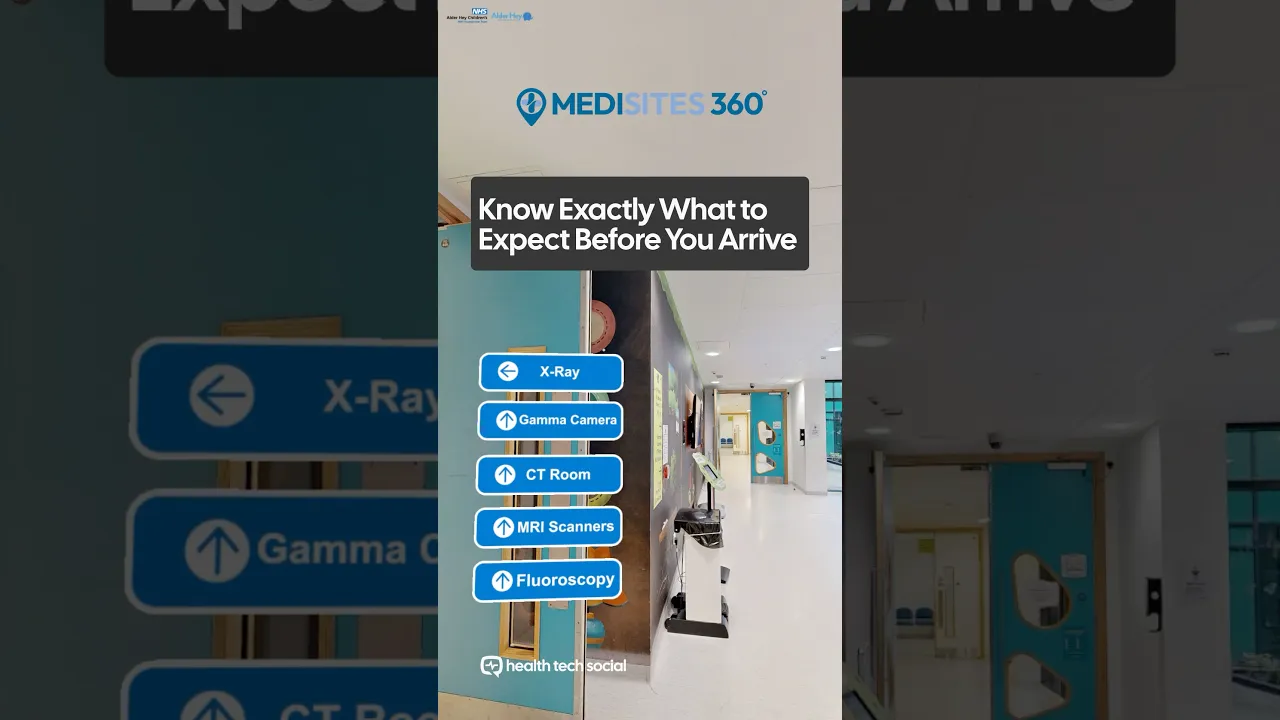
MediSites360 is designed to close the gap between an appointment being confirmed and the patient walking through the hospital doors. By acting as a "digital front door," the platform provides a practical pre-visit tool that prepares patients for exactly what to expect.
MediSites360 creates interactive, 360-degree digital environments. Think of it as a specialised "Google Maps" for healthcare settings. It allows patients and families to explore key areas from their own homes.
Pre-visit Orientation: Patients can familiarise themselves with entrances, departments, waiting areas and key routes before attending.
Wayfinding Support: Hospitals can guide patients and visitors through complex sites, helping them understand the journey from arrival to destination.
Patient Information: View videos, guidance, and embedded content that explain procedures and medical equipment.
Accessibility and Inclusion: Patients, carers and visitors can review the environment in advance, supporting people with mobility, sensory, neurodivergent or anxiety-related needs.
Staff and Operational Benefits: Better-informed visitors can reduce repetitive direction requests and help ease pressure on reception, volunteers and frontline teams.
MediSites360 focuses on an often-overlooked part of the patient journey: the period before the appointment. By reducing uncertainty, the platform helps patients feel more prepared and less overwhelmed. This is particularly useful for children, families, and those with complex accessibility or sensory needs.
There is also an impact on healthcare systems. When visitors can navigate independently, hospital staff spend less time giving directions, and patients are less likely to turn up late.
Should a "digital front door" become a standard part of how NHS trusts support patients? Let us know your thoughts in the comments.
Contact MediSites360 here: Alan@medisites360.co.uk
Sources: https://www.medisites360.co.uk/
This post is for informational purposes only and is not medical advice, and has been produced in collaboration with Medisites360.
TikTok | LinkedIn | Instagram | YouTube | healthtechsocial.com
Message or email us at info@healthtechsocial.com